LEGO® DUPLO® Peppa Pig
- 4.4
- Rating
- 10.00M
- Installs
- Free
- Price
 Analysis by App-foxy
LEGO® DUPLO® Peppa Pig brings two familiar children’s worlds together in a playful educational game from StoryToys. I found its appeal easy to understand: it uses Peppa Pig’s friendly characters and the visual language of LEGO DUPLO to make early play feel more inviting than a traditional lesson. It is aimed at children rather than adult gamers, and the best experience comes when a parent treats it as a shared activity instead of simply handing over a device.
The game is free to download, which makes trying it straightforward. It also includes in-app purchases priced from $2.99 to $39.99 per item, so the important question is not only whether a child enjoys the free access, but whether the available content justifies spending more for your family. I would describe it as a gentle, character-led learning game with strong appeal for Peppa Pig fans, while families looking for a completely open-ended building sandbox or a clearly defined academic curriculum may prefer something else.
A familiar setting that lowers the barrier to learning
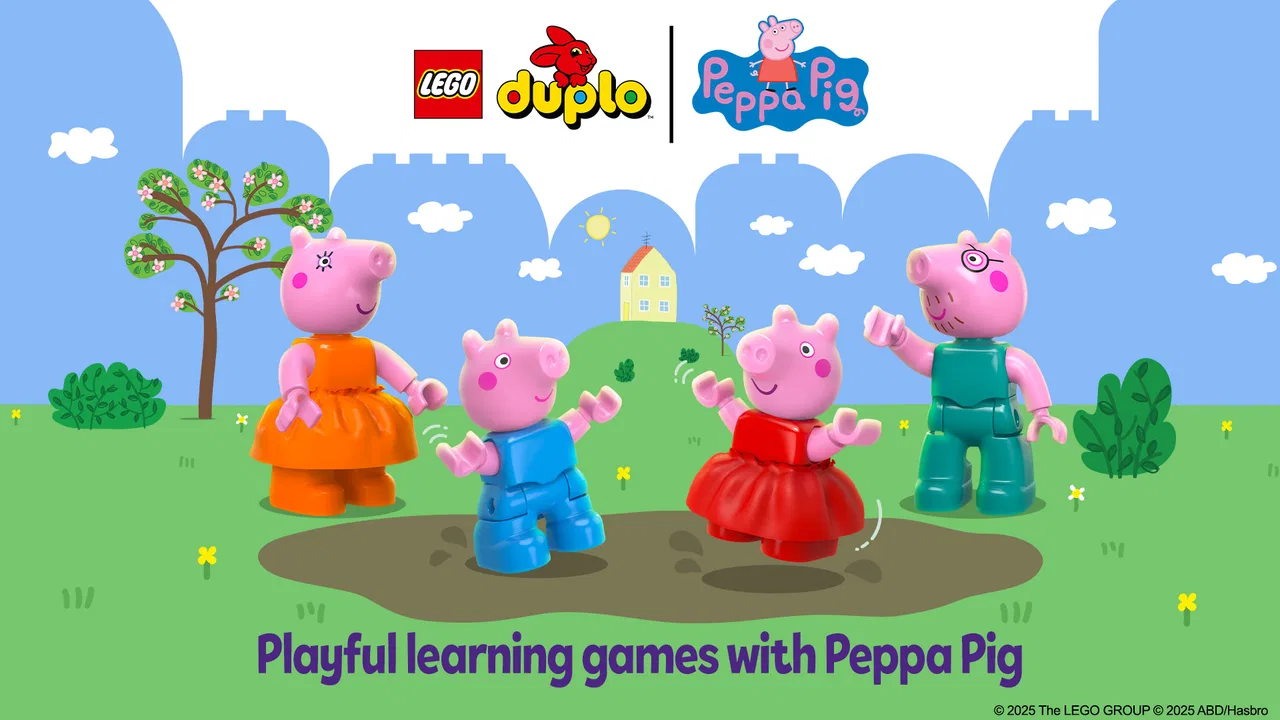
What works first is recognition. Peppa Pig gives young children an immediate emotional connection, while LEGO DUPLO suggests colourful construction, simple shapes and hands-on creativity. That combination makes the game feel less like a worksheet and more like an invitation to play. In my experience, that matters with younger children who may resist an app that announces itself as educational from the first screen.
You May Also Like

 Blood Strike: 2.5 Anniversary
Blood Strike’s Loadouts Turn Every Drop Into a Tactical Gamble
A close look at Blood Strike’s custom loadouts: how fast access to signature weapons reshapes its battle royale rhythm, rewards preparation, and narrows the gap between fights.

 Pandora - Music & Podcasts
Pandora’s Music Is Easy to Start, but Harder to Recover
Pandora’s strength is its low-effort path from a seed to a station. Its weak spot is how much confidence it asks you to place in connection, setup, and quiet recovery.

 8 Ball Pool
 Is Built on Rivalries, Rematches, and Routine
A close look at the rivalries, rematches, shared routines, and unanswered safety questions that turn a quick pool match into a persistent mobile community.

 Samsung Music
’s Quiet Strength Is Playing What You Already Own
Its reach comes less from spectacle than from dependable access to a personal library. That simplicity is both the app’s strongest retention engine and its ceiling.

 AccuWeather: Weather Radar
AccuWeather Review: A Quick, Clear Forecast for Everyday Decisions
For everyday plans, the best forecast is the one you can understand quickly. AccuWeather makes rain timing, radar, and local conditions easy to act on, with a few trade-offs.

 Hill Climb Racing
Why Hill Climb Racing Still Turns Crashes Into One More Run
A tiny car, a bumpy hill and one more upgrade: Hill Climb Racing keeps resurfacing because its simple chaos makes every near-miss feel personal.
More From Our News Desk



StoryToys is the developer, and the game sits in the educational category. Its content rating is Everyone, which fits the broad family audience. The release date was May 28, 2024, and the current version is 10.2.0. It requires Android 8.0 or later, a practical detail to check before installing on an older family tablet or phone.
The central idea is not difficult to grasp: children enter a Peppa Pig world shaped by LEGO DUPLO’s creative identity. That gives the experience a useful balance. Peppa supplies stories and personalities, while the building theme encourages children to look at objects as things they can arrange, combine and explore rather than merely watch.
How the free access affects the decision
The free entry point is the strongest reason to test it. Parents can see whether a child responds to the characters, the pace and the style before committing money. That is particularly useful because children’s preferences are unpredictable: one child may become absorbed immediately, while another may lose interest after a short session even if the subject seems perfect on paper.
However, free does not mean the whole experience is necessarily available without spending. The game offers optional purchases ranging from $2.99 to $39.99 per item. I would therefore approach the first session as an evaluation rather than assuming that every activity or play area comes with the initial download. The sensible workflow is to let the child try the accessible material, watch how independently they can use it, and then decide whether additional content would genuinely be used.
This distinction is important for value. A free children’s game can be worthwhile even when a family never buys anything, provided the available experience is enjoyable and useful. Paid content can also be good value when it becomes part of a regular routine. What I would avoid is purchasing quickly because a child recognises Peppa Pig. Familiar branding creates excitement, but it does not automatically guarantee sustained engagement.
What children can gain from the play style
The most convincing benefit is the way the game can turn a short screen session into a conversation. A parent can ask a child why a character belongs in a particular place, what should be built next or how two objects might fit together. Those questions extend the experience beyond tapping and help develop language, sequencing and simple problem-solving habits.
For example, I can imagine using it after preschool while preparing a snack. A child could play for a few minutes, then explain what happened or describe the characters and objects they noticed. That makes the app a useful transition activity rather than background noise. It is also a better use of the game than leaving it running while adults handle other tasks, because the creative theme gives parents plenty of opportunities to talk and respond.
A less obvious strength is its potential as a low-pressure starting point for children who are not yet comfortable with structured learning apps. Many educational games lead with letters, numbers or quizzes. This one has a softer entry because the child already understands Peppa Pig’s world. If your child becomes anxious when an app feels like a test, the familiar setting may make participation easier.
Another useful angle is imaginative play. Even when the educational value is informal rather than tied to a visible lesson, children can practise making choices, following a sequence and explaining their decisions. Those are small skills, but they are meaningful at this age. I would not use it as a replacement for books, physical LEGO DUPLO or real-world play; I would use it as a bridge between those activities.
Where the LEGO DUPLO identity helps and where it may disappoint
The LEGO DUPLO theme gives the game a clear personality. It suggests a world that is approachable, chunky and designed for young children rather than a fast, competitive game. That is a good match for families who want calm play. It also helps children connect digital objects with physical construction toys they may already know.
At the same time, parents should keep expectations realistic. The presence of LEGO DUPLO in the title does not mean the app can replace a box of bricks. Digital interaction is convenient, but it does not provide the tactile feedback, fine-motor practice or open-ended physical experimentation of building on the floor. If your main goal is hand strength, spatial manipulation or independent construction, physical DUPLO is the better purchase.
The Peppa Pig connection creates a similar trade-off. It can motivate a fan to explore, but children who do not care about the character may find the setting less compelling. Families seeking a neutral learning tool without licensed characters may prefer a more focused educational app. In contrast, children who already enjoy Peppa Pig may need less encouragement to begin.
Practical ways to use it without wasting the free trial
I would start by playing alongside the child for one complete short session. Rather than taking control, I would watch where they hesitate. Do they understand what to do next? Do they experiment with the creative elements? Do they talk about the characters? These observations tell you more about the game’s suitability than a quick glance at its colourful presentation.
A second useful approach is to set a clear purpose for each session. One day, the focus might be retelling what happened. Another day, it could be naming colours, describing positions or inventing a small story around the LEGO-inspired setting. This prevents the app from becoming a repetitive tapping routine and gives the child a reason to return with a different kind of attention.
I also recommend separating the child’s enjoyment from the purchase decision. Let the child show you which parts they return to naturally, then consider whether a paid item would deepen that interest. Because individual purchases can reach $39.99, the upper end deserves deliberate consideration rather than an impulse decision. The free download is best treated as a hands-on test of fit, not a promise that every part is free.
For shared devices, I would use it during a predictable window, such as after dinner or before a bath, instead of making it an all-day option. That keeps the game connected to a routine and makes it easier to stop. The approach is especially helpful for younger children who may struggle to judge when a session has gone on long enough.
Performance expectations and family fit
The Android requirement of 8.0 or later means compatibility should be checked before a child becomes excited about playing. On a newer phone or tablet, the main practical consideration is screen size: a larger display is usually more comfortable for a child sharing the device with an adult, while a phone is more convenient for travel. I would favour a tablet for home use and keep the phone as a backup rather than making it the primary screen.
The game’s Everyone rating makes it suitable for a broad family audience, but that does not mean every child will use it in the same way. A preschooler may need guidance with navigation, while an older child may quickly decide that the pace is too simple. Its strongest audience is children who enjoy character-based pretend play and are still developing confidence with early learning activities.
It is also worth thinking about the adult’s role. This is not the kind of app I would choose for a child who needs a completely independent activity while a parent is unavailable. The game may be easy to start, but its richest value comes from discussion and imaginative follow-up. If you want a quiet digital babysitter, the educational label alone should not be the deciding factor.
How it compares with common alternatives
Compared with a conventional alphabet or counting game, this title is more story-led and character-driven. That can make it more inviting, but it may be less suitable when you want repeated practice of one clearly measurable skill. A focused phonics app is usually the better choice for letter-sound work; a number game is more appropriate for deliberate counting practice.
Compared with a video-only Peppa Pig experience, this game has more potential for participation. Watching an episode can be relaxing, but the LEGO DUPLO angle gives children a reason to make choices and explore. The trade-off is that video is often easier to use passively, while this game benefits more from an adult asking questions and encouraging the child to explain what they are doing.
Compared with physical LEGO DUPLO sets, the app is more portable and easier to introduce during travel. It does not create the same tactile or open-ended building experience, though. I see the two as companions rather than substitutes: the digital game can spark a story, and physical bricks can let the child continue that story away from the screen.
Compared with a broad educational subscription, this title may feel more focused because Peppa Pig and LEGO DUPLO give it a recognisable centre. A subscription can offer greater variety across subjects, but variety is not always better for a child who engages deeply with one familiar theme. The right choice depends on whether your priority is a specific character-led experience or a larger library of lessons.
What the audience response suggests, with a sensible caveat
The game has an average rating of 4.1 from around twelve thousand ratings, and it has passed five million installs. Those figures indicate substantial interest and generally positive reception, but they should not replace your own trial. Children’s apps are especially personal: age, familiarity with Peppa Pig, patience with guided play and access to a suitable device all affect the experience.
I would read the rating as reassurance that the concept has found an audience, not as proof that every family will find the paid content worthwhile. The number of written reviews is eighty-one, so the star average offers a broader signal than the written commentary. In practical terms, the free access remains the most reliable way to judge whether your child enjoys this particular mix of storytelling and construction.
Who will get the most value
I would recommend trying it first for a young Peppa Pig fan who enjoys pretend play, colourful objects and simple creative choices. It is also a good candidate for parents who want an educational game that can lead into conversation without feeling like formal homework. Families with a LEGO DUPLO connection may find that the familiar building theme makes the digital world easier to understand.
It can be especially useful during short, supervised moments: a restaurant wait, a quiet period after preschool or a travel break when carrying physical toys is inconvenient. The game’s value in those situations comes from being familiar and easy to discuss, not from filling every spare minute with screen activity.
I would be more cautious if your child is older and wants complex challenges, if your main goal is a specific academic outcome, or if you want a completely tactile construction experience. I would also skip it when licensed characters do not motivate your child. In those cases, a focused learning app, a physical building set or a broader educational library may offer better value.
My verdict on downloading and spending
My recommendation is to download LEGO® DUPLO® Peppa Pig and test the free access with your child before considering any purchase. The combination of Peppa Pig familiarity and LEGO DUPLO creativity gives it a warmer, more imaginative feel than many drill-based educational games. Its strongest results appear when an adult turns the child’s play into conversation, storytelling and simple problem solving.
I would not describe it as a complete learning program or a substitute for physical play. The optional purchases, which range from $2.99 to $39.99 per item, also mean that value depends heavily on how much content your child actually uses. A child who returns regularly and explores creatively may justify spending; a child who only watches or loses interest quickly probably does not.
Overall, StoryToys has made a sensible choice by combining a beloved character world with a construction-inspired setting. For the right child, it can be a friendly doorway into educational play. For families wanting measurable lessons, advanced challenges or hands-on building, another option will be stronger. I would recommend it as a free-to-try companion to real-world play, with paid content considered only after your child shows sustained interest.
FAQs for LEGO® DUPLO® Peppa Pig
01What age group is LEGO® DUPLO® Peppa Pig suitable for?
LEGO® DUPLO® Peppa Pig is designed primarily for young children aged 2 to 5 years. The app offers a safe and engaging environment for toddlers to explore, promoting creativity and problem-solving skills through interactive play. It's an excellent way for kids to enjoy digital learning with familiar characters.
02Are there any in-app purchases in LEGO® DUPLO® Peppa Pig?
Yes, LEGO® DUPLO® Peppa Pig does offer in-app purchases. While the basic version of the app provides several free activities, additional content and features may require payment. It's advisable for parents to review purchase options and set appropriate restrictions to manage spending.
03Does LEGO® DUPLO® Peppa Pig require an internet connection to play?
LEGO® DUPLO® Peppa Pig can be played offline, making it convenient for use during travel or in areas without internet access. However, an internet connection may be required initially to download the app and any updates. Some features might also need internet access to function properly.
04How does LEGO® DUPLO® Peppa Pig ensure the safety of my child’s data?
LEGO® DUPLO® Peppa Pig is committed to child safety and adheres to strict privacy guidelines. The app does not collect personal data without parental consent and is compliant with privacy laws such as COPPA. Parents should review the app’s privacy policy for detailed information on data handling.
05What educational benefits does LEGO® DUPLO® Peppa Pig offer?
LEGO® DUPLO® Peppa Pig provides numerous educational benefits, including enhancing fine motor skills, fostering creativity, and encouraging problem-solving abilities. Through interactive play, children can learn about colors, shapes, and basic storytelling, all within the playful world of Peppa Pig and her friends.
Pros
- Engaging for young children.
- Colorful and intuitive design.
- Promotes creativity and learning.
- Easy navigation for toddlers.
- Features beloved Peppa Pig characters.
Cons
- Limited content without purchase.
- Requires internet for some features.
- May lag on older devices.
- Ads can be intrusive at times.
- May not appeal to older kids.

LEGO® DUPLO® Peppa Pig
Gallery